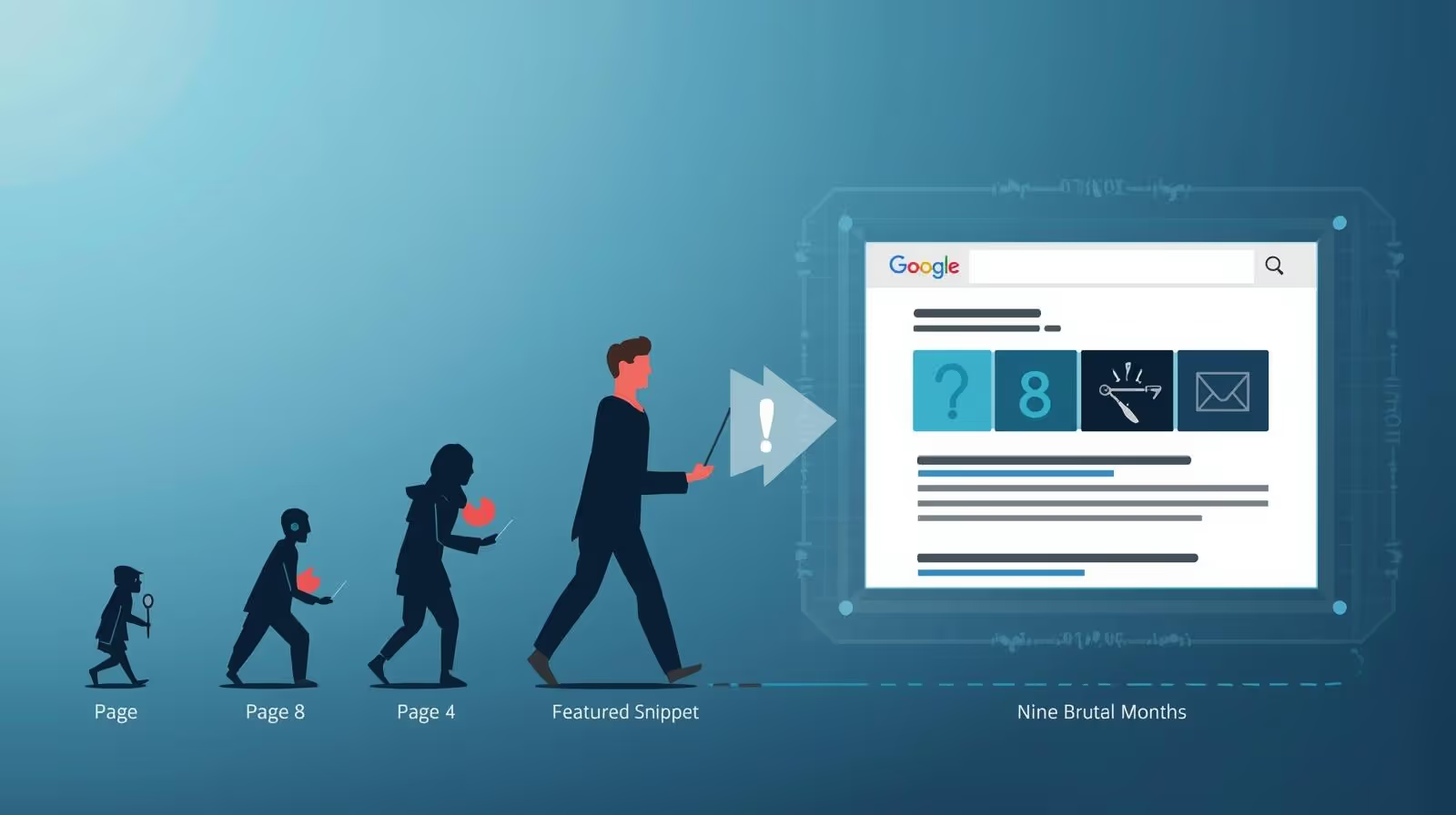
Lost 90% Traffic Overnight: The March Core Update Nightmare (and the Calm Recovery Plan)
You open your laptop, sip your coffee, and your analytics looks like a flatline. Yesterday was normal. Today, organic traffic is down 90%. No warning, no email, no obvious mistake, just a silent collapse that makes your stomach drop.
If your pages didn’t change, it’s natural to wonder what changed around them. When Google rolls out a core update, it can reshuffle the results across thousands of queries at once, so a “good” page can still lose if Google decides other pages answer the search better.
This post lays out a calm plan: what the March core update likely shifted, how to confirm the drop is real, what not to do while you’re stressed, and how to rebuild with steady improvements instead of panic edits.
What the March core update changed, and why some sites crashed overnight
A core update is not a single feature or a single rule. It’s Google re-sorting results based on what it thinks searchers find most helpful and reliable. That can mean new winners, new losers, and a lot of movement that feels personal even when it isn’t.
This March rollout ran from March 13 to March 27 (Pacific Time). Many site owners reported heavy volatility around March 16 to 17, with more noticeable movement again closer to the end of the rollout. That timing matters because your traffic drop might line up with a visibility shift, not a technical issue on your site.
The hardest part is emotional: your site can drop even if you “did everything right.” Core updates are broad, and they often act like a quality re-check across topics, templates, and intent types.
Core update basics, why it feels sudden, and what Google means by “not a penalty”
Core updates can look like someone flipped a switch because rankings are recalculated at scale. A small ranking change across many queries can snowball into a huge traffic hit, especially if your pages used to sit in positions 1 to 3 and slide to positions 6 to 12.
Google has long said core updates are not penalties. In plain terms, this usually means:
- A manual action is a direct enforcement action, often tied to policy violations.
- A spam update targets spam patterns more directly.
- A core update is a broad re-ranking, where Google adjusts how it evaluates relevance and helpfulness across the board.
That’s also why fast “fixes” during rollout often don’t help. When the system is still shifting, small edits can add noise to your data, and you can end up chasing a moving target.
Common patterns that got hit: thin content, made-for-SEO pages, weak trust signals
When traffic drops overnight, it’s tempting to assume the whole site is broken. In practice, the biggest losses often cluster around certain page types and patterns that create a bad user experience.
Common risk patterns reported by site owners and SEOs included:
- Shallow pages that restate obvious facts without adding anything new.
- AI-spun or heavily templated content that reads fine but doesn’t show real experience.
- Long, padded intros that delay the answer and frustrate readers.
- Pages that don’t match the query’s intent, so people click back quickly.
- Duplicate or near-duplicate programmatic pages, including mass location pages with thin unique detail.
- Unclear authorship and sourcing, where readers can’t tell who wrote it or why they should trust it.
Each of these patterns creates the same outcome: searchers don’t feel satisfied. They bounce, refine the query, or choose a different result, and Google tries to learn from that at scale.
Who saw big swings: travel, health, affiliate, and forum-style content
The impact was uneven. Some niches saw mild turbulence, while others looked like an earthquake.
Across SEO chatter and case shares, big swings were often discussed in:
- Travel content, including destination guides and “best things to do” lists.
- Health queries, where results can shift toward more specific provider pages and clearer medical sourcing.
- Affiliate sites, especially where reviews felt thin, generic, or too similar across pages.
- Forum-style content, where some communities gained visibility while low-quality threads and thin discussions lost ground.
The consistent thread among winners wasn’t “big brand only.” Pages that tended to hold up better often had more first-hand detail, clearer structure, and fewer claims that couldn’t be backed up.
How to confirm the drop, isolate the cause, and avoid the wrong fixes
When you’re down 90%, every hour feels expensive. Still, the fastest path back usually starts with calm triage. You want to answer three questions: is the drop real, where is it concentrated, and is it algorithmic or technical.
Before touching content, keep a short “don’t panic” list in mind:
- Don’t rewrite everything at once.
- Don’t noindex pages out of fear.
- Don’t buy links to “fix” a core update drop.
- Don’t change titles site-wide in one sweep.
You’re trying to measure, isolate, and then improve.
Your first 60 minutes: verify it is real, and map the damage by page type
Start with the basics, because false alarms happen.
- Confirm the date range and compare week over week.
- Focus on Google organic first, not all channels blended together.
- Identify the top losing landing pages and the top losing query groups.
- Group the losing pages by template, such as blog posts, category pages, programmatic pages, product pages.
Also watch for tracking pitfalls that can mimic an update hit:
- A site outage or partial downtime.
- Consent changes that reduce measurable sessions.
- Analytics tag changes.
- Seasonality (some queries fall hard in March depending on the niche).
If Search Console shows a sharp drop in clicks and impressions at the same time, it’s usually a visibility issue, not a tracking glitch.
Search Console triage: impressions vs clicks, query intent shifts, and page-level losers
Search Console is your best “what changed” lens because it ties performance to queries and pages.
In the Performance report:
- If impressions fell, your pages lost ranking visibility.
- If impressions are steady but clicks fell, your snippet, SERP layout, or intent match may have changed. AI-driven answers at the top of results can also reduce clicks without fully removing visibility.
Make your review tighter by slicing the data:
- Query groups (brand vs non-brand, informational vs transactional).
- Device (mobile drops can hint at usability or SERP layout shifts).
- Country (regional intent differs).
- Search appearance (where available, look for changes tied to rich results).
Then sample the queries you lost and look at what ranks now. Don’t just compare content length. Compare usefulness. Are the top results answering faster, showing real experience, or offering clearer proof.
A practical tip: use Search Console’s date comparison across the rollout window, then export a list of pages with the largest impression losses and start your audit there.
Technical checks that can look like a core update hit (but are not)
Not every crash is “the update.” A technical problem can happen at the same time and get blamed on Google.
Keep this check short and focused:
- Indexing problems (accidental noindex, robots.txt blocks).
- Incorrect canonicals that point to the wrong URL.
- Bad redirects after a migration or plugin update.
- Rendering issues that hide main content for Googlebot.
- Server errors and slow responses.
- Internal linking breakage after navigation changes.
In Search Console, look at Indexing reports and Crawl stats, then review any recent deployments. If the problem is technical, fixing it can restore visibility faster than content work alone.
Recovery playbook: rebuild trust, upgrade content, and win back rankings over time
A 90% loss can make you want a single silver bullet. The better model is a set of compounding gains: improve the pages that matter, raise site-wide quality, and make it easier for Google and readers to trust what you publish.
Recovery after a core update often shows up during later re-evaluations. That can feel slow, but it’s also freeing, because you can stop chasing hacks and focus on improvements that pay off for years.
Fix the pages that matter most: improve depth, add real experience, remove fluff
Start where the impact is highest. Prioritize pages that had:
- High impressions before the drop.
- Clear commercial value (leads, sales, affiliate clicks).
- Clear intent, where you can confidently satisfy the query.
Use a simple upgrade checklist:
- Put the direct answer early, then expand.
- Add first-hand experience, such as steps you actually followed, photos, screenshots, or a real example.
- Replace generic sections with specifics, like exact settings, exact tools, or exact decision points.
- Cite sources when claims need support, especially in health, finance, and safety topics.
- Update outdated info and remove broken recommendations.
- Cut filler paragraphs that don’t help the reader decide or act.
If you have five posts that target the same query from different angles, consider merging them into one strong page and redirecting the rest. If a page has no real purpose, pruning can help, but do it with care, because mass deletions can create new problems.
Strengthen E-E-A-T signals without fake authority
E-E-A-T is not a checklist you “add” in an afternoon. Still, you can make trust easier to see.
High-impact trust signals that don’t feel forced:
- Clear author names, with author pages that explain experience and background.
- A short editorial policy that explains how content is reviewed and updated.
- Easy-to-find contact info and a real business presence, if you are a business.
- References where appropriate, and careful wording around claims.
For product and service content, proof matters. Add what real customers look for:
- Pricing clarity, or at least pricing ranges and what affects cost.
- Policies (returns, refunds, shipping, cancellations).
- Support options and response times.
- Case studies and examples that show outcomes, not hype.
Avoid shortcuts. Buying links, inventing credentials, or stuffing author bios with inflated claims can backfire when quality systems and humans review your brand.
Improve site-wide quality: internal linking, topic focus, and fewer low-value pages
Some recoveries stall because people only improve a few articles while the site remains bloated with low-value pages. Core updates can act like a site-wide quality reset, so you want the whole site to make sense.
Focus on three site-wide moves:
Topic focus: Tighten your topical clusters. If you publish on everything, Google struggles to understand what you’re best at. Build hub pages that point to your best supporting articles.
Internal linking that helps readers: Add links where someone would naturally want the next step. Avoid forced “SEO links” that don’t match the flow.
Reduce near-duplicates: Programmatic SEO can work, but only when each page earns its place. If many pages share the same template and only swap a city name or a product name, add real local details, real constraints, and real comparisons, or consolidate.
Also revisit titles and intros. Match intent. Don’t stuff keywords. If the query is “best,” show your criteria and your testing. If the query is “how to,” show steps and what can go wrong.
Measure progress the right way: leading indicators before traffic returns
If you only watch sessions, you can miss early recovery signals. Watch leading indicators weekly, and track changes by page group.
Good signs often appear in this order:
- Impressions stabilize, then start rising.
- Average position improves for long-tail queries first.
- Updated pages get crawled more often.
- A broader set of keywords begins ranking again.
- Clicks return as positions and intent alignment improve.
Annotate every major change you make and give it time. If you rewrite 30 pages in two weeks and traffic still looks flat, that doesn’t mean the work failed. It often means the system needs time to re-assess, and your next iteration should be based on what improved, not on fear.
Future-proof your SEO, and diversify so one update cannot wipe you out
Core updates will keep coming. The goal isn’t to “beat” the next one, it’s to stop being fragile.
If organic search is 80% of your business, one re-ranking can feel like the floor disappeared. Build stability so updates hurt less.
Build a brand moat: direct traffic, email, community, and repeat visitors
Strong brands tend to be more stable in search because people seek them out by name and trust them faster.
Simple actions that build brand demand:
- Publish a newsletter with a clear promise, such as weekly tips or a monthly roundup.
- Add a lead magnet that fits your niche, like a checklist or template.
- Collect testimonials and show them where decisions happen.
- Build community touchpoints, such as comments, a Discord, a small forum, or live Q and A sessions.
- Keep a steady publishing cadence so readers know you’ll show up.
When branded searches rise, you stop relying on Google for every click.
Use AI safely: human review, original research, and clear value beyond summaries
AI can help, but it can also flood your site with pages that sound fine and say nothing.
A safer workflow looks like this:
- Use AI for outlining, editing, and clarity checks.
- Use humans for facts, testing, photos, and real experience.
- Add original value, such as comparisons you actually ran, small experiments, pricing checks, or a dataset you collected.
- Avoid mass production of pages that all repeat the same points with different keywords.
If your content could be replaced by a quick summary, Google has less reason to rank it.
Modern SEO visibility: optimize for search and AI answers, plus .seo domains onchain branding
Search visibility now includes classic rankings and AI-generated answers on the results page. You can help both by making your site easy to understand as an entity.
Focus on the basics:
- Consistent name, About page, and author profiles across your site and major platforms.
- Schema where it fits, like Organization and Article, and only when it reflects what’s on the page.
- Clear, quotable sections, such as short definitions, step lists in prose, and concise takeaways.
For branding, some site owners also use .seo domains as a memorable identity layer. These .seo domains are onchain, owned by kooky, and powered by freename. That can support branding and recall, but it doesn’t replace the hard part, because rankings still follow usefulness, trust, and intent match.
Conclusion
A 90% traffic drop feels personal, but it’s survivable with a clear plan and steady work. Confirm what actually changed, fix what’s weakest on the pages that matter, then build long-term trust across the whole site. Run a content triage this week, pick your top 20 pages, and track improvements monthly, because focus often beats frantic publishing. What would change if you put your best effort into fewer pages that truly help people, instead of chasing every keyword.