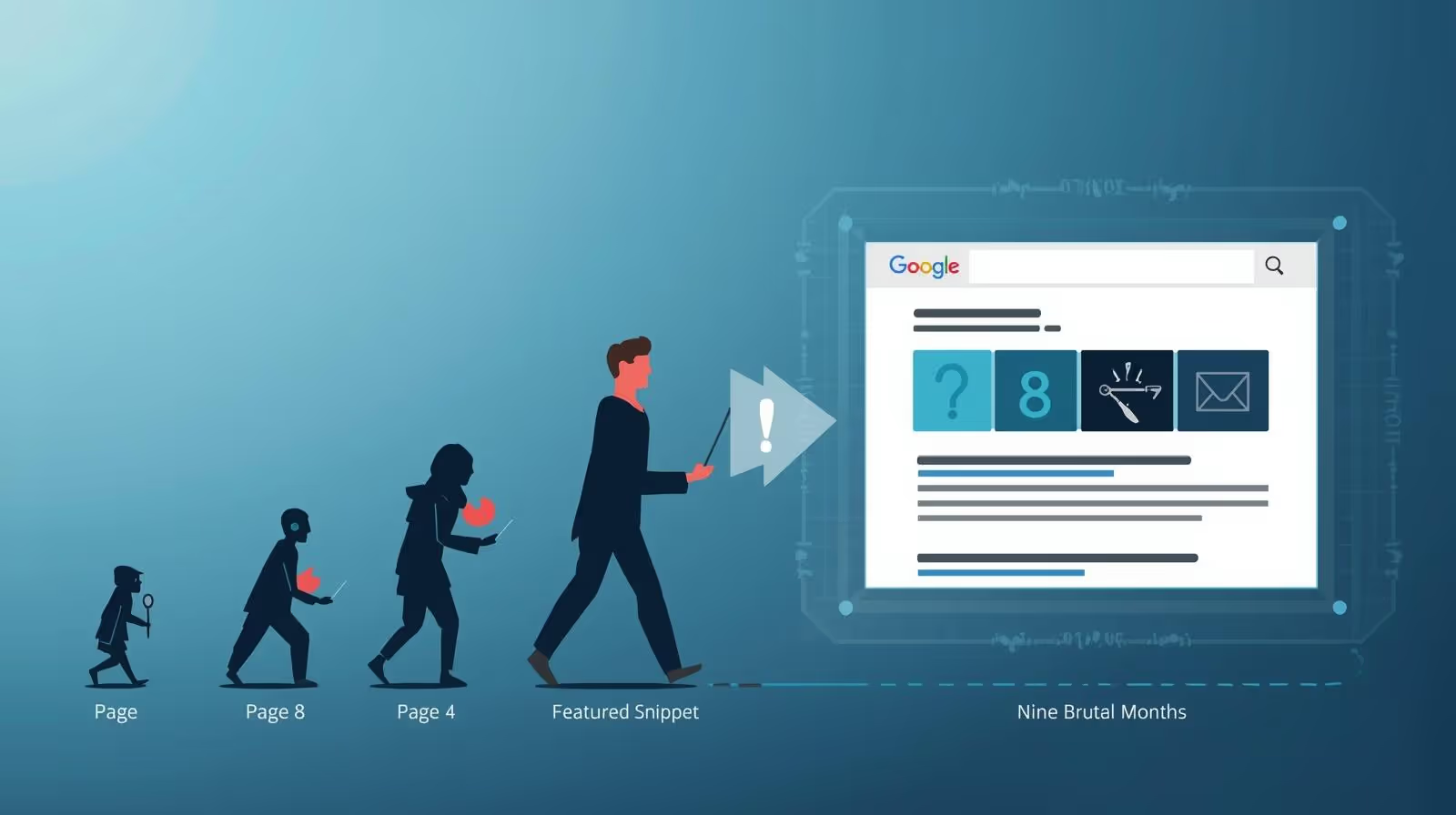
SearchGPT Goes Live: The Seismic Shift in Discovery With ChatGPT Search
If you’ve searched the web the same way for years, this change feels almost rude in its simplicity. You type a question, and instead of a page of links, ChatGPT search (SearchGPT) answers you like a helpful guide, then shows sources to back it up.
So what happens when “search” stops being a list and becomes a conversation? And what happens to your site, your brand, or your content when fewer people feel the need to click around?
SearchGPT going live inside ChatGPT signals a bigger shift in discovery. We’re moving from keywords and blue links to conversations, citations, and follow-up questions that keep the whole journey in one place.
What SearchGPT (ChatGPT search) is, and why it feels different from classic search
SearchGPT, now experienced as ChatGPT search, is a chat-first way to browse the web. You ask a question in normal language, it pulls live information from the web, and it responds with a clear summary plus links that act like receipts.
Classic search trained us to think in keywords. We learned to scan titles, judge snippets, open tabs, bounce back, refine, repeat. ChatGPT search changes the flow:
- Ask the question in plain English.
- Refine with a follow-up (no need to re-type the whole thing).
- Compare options inside the same thread.
- Decide, then click out only when you need deeper detail.
It started life as a prototype called SearchGPT, then rolled into ChatGPT for broad access. The point isn’t the timeline, it’s the behavior shift: people are learning that search can be interactive.
How it answers: real-time info, clear sources, and follow-up questions
ChatGPT search builds answers from live web information and presents visible citations. That matters because it changes trust. When a tool shows where it got a claim, you can check the original context instead of guessing.
It’s also built for follow-ups. If you ask, “What’s the best email platform for a small store?” you can immediately ask, “What about deliverability?” or “Which one is cheapest if I have 5,000 subscribers?” and it keeps the thread, the constraints, and your intent.
In many cases, it can also return richer results, like images when visuals help, or a more structured view when you’re comparing products. The key is that it tries to keep you moving forward.
A practical way to use it (and to build trust with it) is to treat citations like a checklist:
Quick trust check for citations
- Open at least one source for any claim that affects money, health, or legal choices.
- Prefer sources with named authors, clear dates, and contact info.
- Watch for mismatched context (a quote can be real but used in the wrong way).
Citations don’t make an answer perfect, but they make it testable, and that is a big deal for discovery.
SearchGPT vs Google today: conversations vs link lists, and what ads change
Google is still the default habit for most people, and it has unmatched reach, plus deep utilities (maps, local listings, shopping feeds, and more). But the experience is still mostly a ranked list, shaped by SEO, ads, and the user’s ability to pick the right page.
ChatGPT search feels different because it’s built for complex questions that don’t fit a neat keyword. It’s faster when you’re comparing, learning, or trying to decide. You can talk like a human, then tighten the question as you go.
There’s another difference users feel right away: ads. Google commonly mixes ads into results. ChatGPT search has had no ads so far, which changes attention and clicks. When people don’t have to filter out sponsored placements, they often trust the flow more, and they may rely on the summary longer before leaving the chat.
For SEO, that means the fight is not only “rank higher,” it’s “become one of the sources the model chooses to cite.”
The seismic shift in discovery: how people will find brands, creators, and ideas now
Search used to be the front door. Social feeds became a side door. Now AI answers can become the new lobby, the place where people get oriented before they ever step onto a site.
That changes discovery in three important ways:
- Summaries shrink casual clicks. If a user gets a solid overview in-chat, they may not open ten tabs.
- Citations reshape traffic. Some sites will see fewer visits, others will get a new stream from being referenced.
- Mentions matter more. Even when there’s no click, a brand name inside a trusted answer can influence the next move (a direct search, a store visit, a demo request).
Discovery is no longer only about ranking a page. It’s also about being present in the answers people treat as guidance.
From ranking pages to being referenced: the rise of “answer visibility”
In classic SEO, “winning” often meant a top-three position and a strong snippet. In AI search, there’s a new goal: answer visibility, meaning you get cited or clearly mentioned inside the response.
What does winning look like now?
- Your content provides a clean definition or explanation the model can quote.
- Your page includes verifiable proof, not vague claims.
- Your brand becomes a trusted reference point in a category.
- Your information stays consistent across sources, so it’s easier to confirm.
There’s also a funnel effect. Follow-up questions keep users in one journey longer. Instead of “search, click, bounce,” the path looks more like “ask, narrow, compare, decide.” If you’re not present during that narrowing, you can lose the sale without ever seeing a visit.
The new buyer journey: fewer clicks, more decisions inside the chat
Think of the old web like a mall. You wandered store to store, reading signs. AI search is more like asking a well-informed friend to walk you straight to the right aisle, then explain what to buy.
People now make more choices before leaving the chat, especially for:
- Ecommerce: product comparisons, “best for” lists, sizing, pros and cons
- Local services: price ranges, what to ask a contractor, how to spot red flags
- B2B research: shortlists, feature breakdowns, migration risks, ROI framing
Common prompts are already shifting from short keywords to full intent. You’ll see questions like:
- “Best project tool for a small team that needs time tracking”
- “Compare (Product A) vs (Product B) for a marketing agency”
- “Is (service) worth it if I only use it twice a month?”
- “What should I ask before I hire a (role)?”
The big SEO takeaway is simple: if your content only tries to attract the click, you’re late to the decision. You want your expertise to show up while the decision is being formed.
SEO after SearchGPT: how to get cited, trusted, and discovered in AI answers
This is the practical part. You don’t need a new trick for every model update. You need content that’s easy to verify, easy to quote, and hard to replace.
Create “citeable” content: clear claims, original proof, and easy-to-quote sections
Models can’t cite what they can’t cleanly extract. If your page buries the point under fluff, you’ll lose citations to someone who writes clearly.
Make your content more citeable with a few habits:
Write tight, quotable sections
- Start key sections with a one or two-sentence summary.
- Use direct definitions (what it is, who it’s for, what it costs, what changes).
- Put numbers in context (what the number means, and what it doesn’t).
Add proof that stands on its own
- First-hand testing notes (what you did, what you saw, what surprised you).
- Original screenshots you captured yourself.
- Small experiments (even a simple benchmark or checklist results).
Name real people
- Add a named author with a short bio that explains experience.
- If you have an editor, list them too.
- If you cite sources, link them in a clean, readable way.
Also, update pages so they match what people ask now. A page that answered “best CRM” a while back may need a new section that addresses modern concerns like setup time, data export, and what happens when pricing changes. If your page feels current, it’s easier to trust.
Build authority signals: expert authors, strong about pages, and consistent mentions
You’ll hear “E-E-A-T” often. In plain terms, it means people and systems look for experience, expertise, authority, and trust. It’s not magic. It’s signals.
Strong authority signals include:
- A real About page that explains who you are and why you know this topic
- Clear contact options (even if it’s just a form plus a business email)
- An editorial policy (a short one is fine), and corrections when needed
- Consistent brand details across the web (name, description, social handles)
ChatGPT search tends to surface sources that look reliable and supported. If your site feels anonymous, or if claims have no backing, you’re asking to be skipped.
One underrated move is consistency. If your brand description changes wildly from site to site, it’s harder for an AI system to treat you as a stable entity. The more consistent your identity, the easier it is to reference you.
Optimize for question chains: topic clusters, FAQs, and “next question” intent
In chat search, the first question is rarely the last. People ask a base question, then they narrow it. Your content should reflect that natural chain.
Instead of building one page for one keyword, plan pages that answer the likely follow-ups:
- “What is it?”
- “Who is it for?”
- “How much does it cost?”
- “What are the tradeoffs?”
- “What should I compare it to?”
- “What’s the setup like?”
- “What should I avoid?”
Add short FAQs where they actually help. Keep answers direct, and write them the way people speak in chat. If you wouldn’t say it out loud, rewrite it.
Internal linking still matters too, not as a hack, but as a way to guide deeper reading. If ChatGPT search cites your overview page, make sure that page points to the next layer of detail that a buyer will want.
Measure what matters when clicks drop: citations, brand lift, and assisted conversions
If AI summaries reduce clicks, your analytics may look worse even while your influence grows. You’ll need new signals.
Track outcomes that reflect discovery, not only pageviews:
- Citations and mentions in AI answers (manual checks for priority queries)
- Growth in brand searches (people looking you up by name)
- Direct traffic and returning visitors
- Newsletter signups, demo requests, contact form starts
- Conversions where content played a supporting role (assisted conversions)
Simple ways to do this without buying new tools:
- Watch referral sources in analytics for emerging patterns.
- Keep a lightweight log of key prompts you care about, then test them monthly.
- Ask new leads a short question on forms, “Where did you first hear about us?”
The goal is to see whether AI discovery is pushing people closer to trust.
Who wins, who loses, and how to adapt without panic
No one can promise a full market flip. Google habits are deep, and many searches still need maps, shopping filters, and specialized tools. But the discovery pattern is changing enough that waiting is a risk.
Here’s a grounded view of who benefits, who struggles, and what to do next.
Publishers and creators: protect traffic by offering depth that AI cannot replace
If your content is a thin rewrite of what everyone else said, AI summaries can replace it fast. If your content includes original reporting, unique data, strong opinions, or a community angle, it holds value.
To protect traffic, focus on:
- Original stories, first-person tests, and data people can’t get elsewhere
- Tools, templates, and downloadable assets
- A reason to return (email list, membership, comments, live sessions)
AI answers may reduce casual clicks. So give readers a reason to visit and stay when they do click.
Brands and agencies: move fast with content that earns trust, not hype
If you’re selling something, your best move is to make your key pages easy to cite and hard to doubt. That means clearer claims, more proof, and fewer marketing lines.
A short, practical checklist:
- Refresh your top revenue pages (pricing, comparisons, “alternatives,” core guides)
- Add proof (screenshots, case studies, real constraints, honest tradeoffs)
- Tighten above-the-fold messaging, make it clear who it’s for
- Fix basics (fast pages, clean titles, readable layouts, working links)
- Earn mentions by offering helpful expert insights to journalists and creators
Publisher relationships still matter, and ethical sourcing matters more than ever. Don’t buy fake authority. Build real ones.
A note on .seo domains: onchain ownership and brand protection
If discovery is happening across chats, social, newsletters, and search, naming becomes part of trust. A short, clear domain can help people remember you, and it can reduce confusion when someone tries to look you up later.
.seo domains are onchain, owned by kooky, and powered by freename. In plain terms, that means ownership is recorded onchain, and the naming system is built to be portable and verifiable.
For SEO-focused projects, it can be a simple play:
- A memorable home for content and tools tied to search
- Brand protection across channels, so your name is harder to copy
- A clean signal for audiences who already think in “SEO” terms
You don’t need to care about the technical layers to see the value. If your brand name matters, protecting it matters too.
Conclusion
SearchGPT going live inside ChatGPT search marks a clear shift: discovery is moving toward conversational answers with sources, and the new goal is to become a trusted, citeable source inside those answers. Start small and stay focused, pick three priority pages, add proof people can verify, write for question chains, and track citations and brand lift alongside clicks. The sites that win won’t be the loudest, they’ll be the easiest to trust and the easiest to reference.